Each year the OAS Secretary General publishes a proposed Program-Budget for the coming calendar year. The OAS General Assembly meets in a Special Session to approve the Program-Budget. Find these documents from 1998-2013 here.
Each year in April, the OAS Board of External Auditors publishes a report covering the previous calendar year’s financial results. Reports covering 1996-2016 may be found here.
Approximately six weeks after the end of each semester, the OAS publishes a Semiannual Management and Performance Report, which since 2013 includes reporting on programmatic results. The full texts may be found here.
Here you will find data on the Human Resources of the OAS, including its organizational structure, each organizational unit’s staffing, vacant posts, and performance contracts.
The OAS executes a variety of projects funded by donors. Evaluation reports are commissioned by donors. Reports of these evaluations may be found here.
The Inspector General provides the Secretary General with reports on the audits, investigations, and inspections conducted. These reports are made available to the Permanent Council. More information may be found here.
The OAS has discussed for several years the real estate issue, the funding required for maintenance and repairs, as well as the deferred maintenance of its historic buildings. The General Secretariat has provided a series of options for funding it. The most recent document, reflecting the current status of the Strategy, is CP/CAAP-3211/13 rev. 4.
Here you will find information related to the GS/OAS Procurement Operations, including a list of procurement notices for formal bids, links to the performance contract and travel control measure reports, the applicable procurement rules and regulations, and the training and qualifications of its staff.
The OAS Treasurer certifies the financial statements of all funds managed or administered by the GS/OAS. Here you will find the latest general purpose financial reports for the main OAS funds, as well as OAS Quarterly Financial Reports (QFRs).
Every year the GS/OAS publishes the annual operating plans for all areas of the Organization, used to aid in the formulation of the annual budget and as a way to provide follow-up on institutional mandates.
Here you will find information related to the OAS Strategic Plan 2016-2020, including its design, preparation and approval.
Executive Secretariat for Integral Development (SEDI)
Department of Human Development, Education and Employment
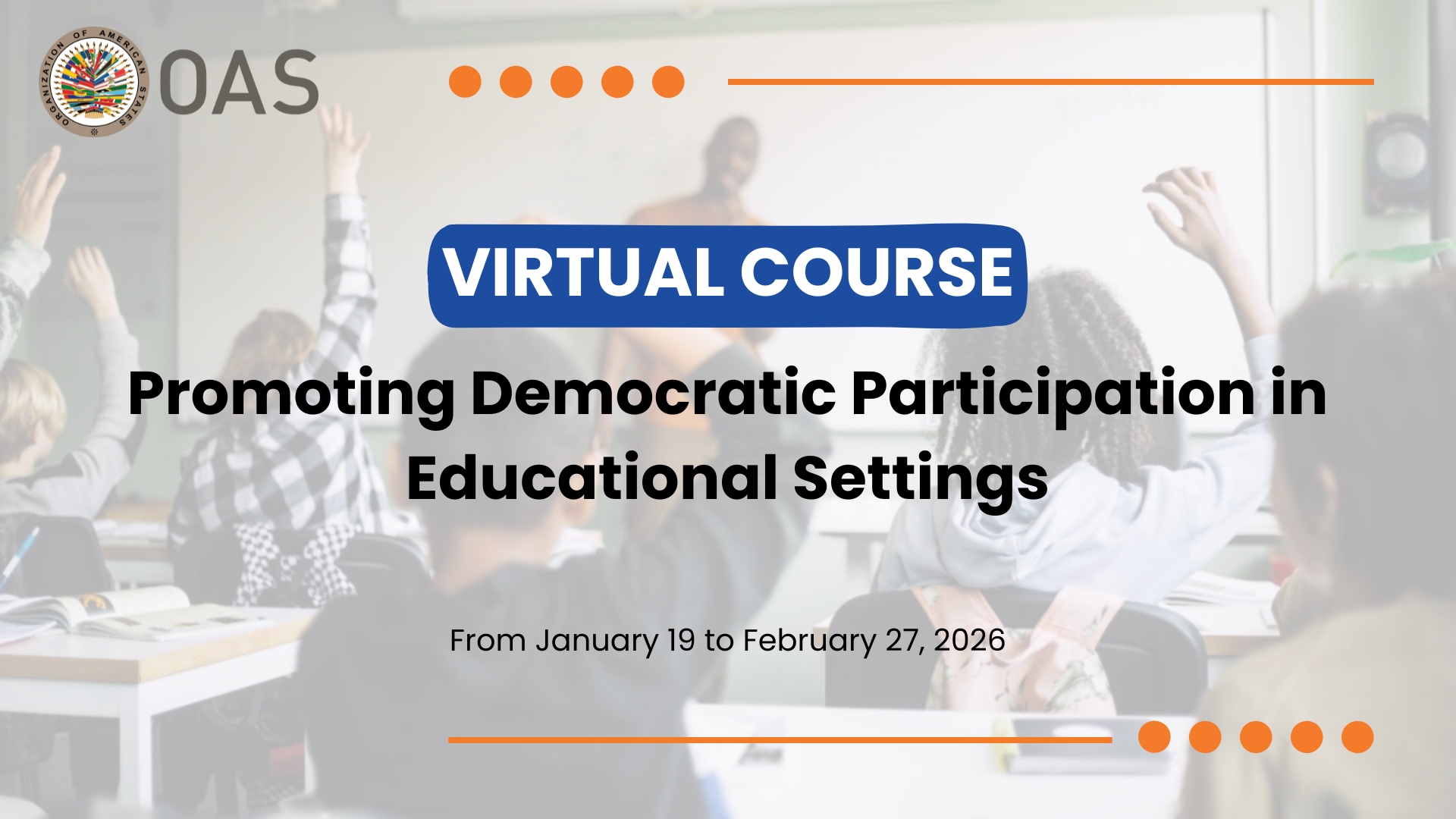
Welcome to the course Promoting Democratic Participation
in Educational Settings!
This course
is designed for teachers and those responsible for the
administration or management of secondary schools across the region.
Its purpose is to highlight the role of education as a foundation
for informed and active democratic participation, while
strengthening the capacity of educators and administrators to
promote these values within their institutions and communities.
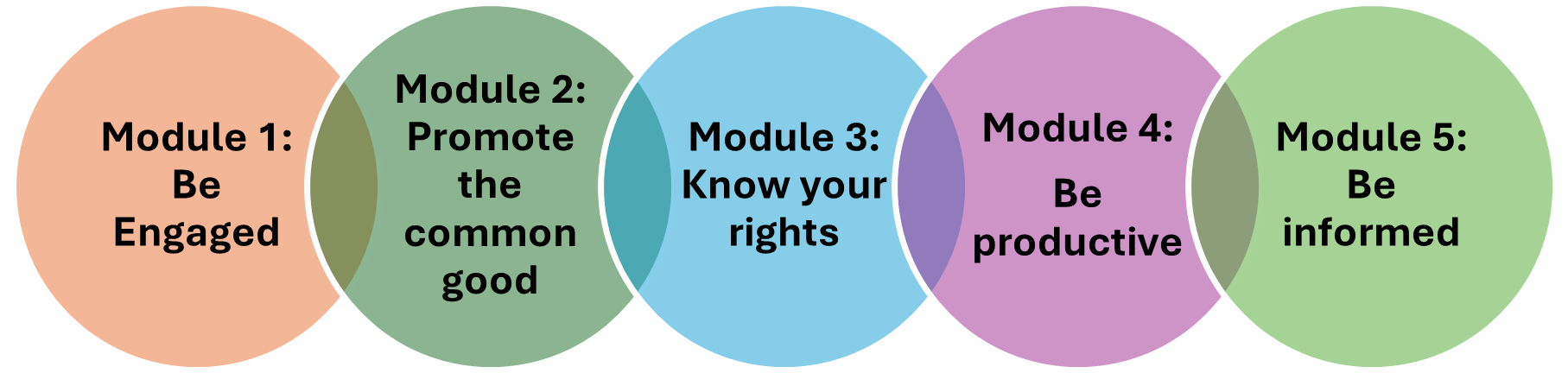
Over six weeks, you will explore the following thematic modules:
Each module
includes reading materials and interactive activities to help you
understand key concepts and share experiences. The goal is to learn
with and from others, recognizing that improving
educational practices—and introducing meaningful changes—happens
through collaboration in the educational community.
In the first module, you will complete a diagnostic survey to
assess your prior knowledge of the topics. At the end of the course,
a post-training survey will allow you to reflect on and synthesize
what you have learned.
To begin, look for the orange box on the
right. It contains links to each module so you can progress
at your own pace. Also, please refer to the
course program, chronogram and guidelines for the integrating
activity.
Each activity
has suggested dates, giving you time to review the materials and
complete the tasks comfortably.
Your
participation is an important step in building a more democratic and
responsible society. Together, we will bring local and regional perspectives
and create spaces for dialogue, collaboration, and learning starting in the
classroom.
This activity is possible thanks to the generous contribution of the
Permanent Mission of the United States to the OAS.

 Facebook
 Twitter